Why mortgage rates matter, how they influence the Oceanside housing market, and why they're only one piece of the puzzle.
If you've been following the real estate market lately, you've probably noticed how much attention mortgage interest rates receive. Every increase or decrease seems to generate headlines about what buyers and sellers should do next.
And while interest rates certainly matter, they don't tell the whole story.
After nearly two decades helping homeowners buy and sell real estate in Oceanside, I've learned that successful decisions rarely come down to a single number. Interest rates influence affordability, but pricing, property condition, location, competition, and personal circumstances all contribute to the outcome.
How Interest Rates Affect Purchasing Power
For most buyers, the biggest impact of mortgage rates is on their monthly payment.
Consider a buyer purchasing a $900,000 home with a 20% down payment. That leaves a mortgage of $720,000.
Here's how different interest rates would affect the monthly principal and interest payment on a 30-year fixed-rate loan:
Interest Rate | Monthly Payment |
5.5% | $4,088 |
6.5% | $4,551 |
7.5% | $5,034 |
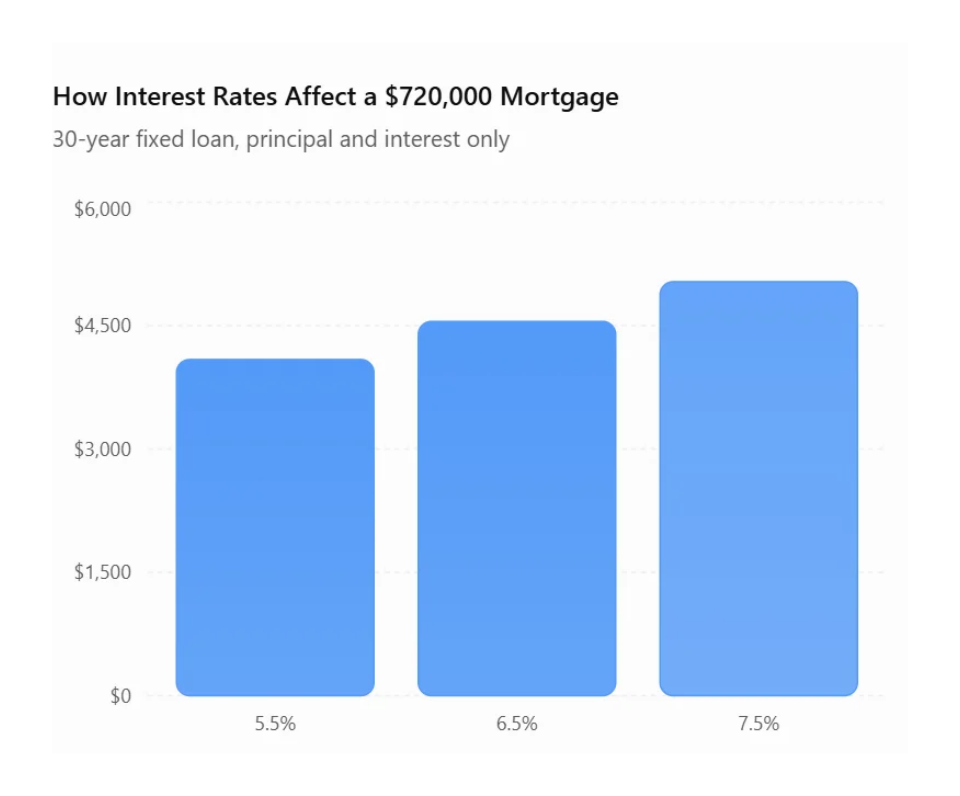
These figures are illustrative and exclude property taxes, insurance, HOA fees, and other expenses.
A two-percentage-point difference in interest rates changes the monthly payment by approximately $946. That's a meaningful difference for many households.
It's also why buyers tend to become more price-conscious when rates rise. Even if they love a particular home, their budget may not allow them to pay what they could have afforded when borrowing costs were lower.
Why Higher Rates Can Make Buyers More Selective
When financing becomes more expensive, buyers often scrutinize their options more carefully.
They may compare homes more closely, pay greater attention to needed repairs, or hesitate to stretch their budgets for a property that doesn't meet their expectations.
This doesn't mean buyers have disappeared. People continue to purchase homes for many reasons, including job changes, growing families, retirement, and lifestyle preferences.
But it does mean sellers need to understand what they're competing against.
A beautifully presented home in a desirable location may generate significant interest, while another property with an unrealistic asking price may struggle to attract offers.
In today's market, buyers generally have less tolerance for a home that is overpriced relative to its competition.
What This Means for Oceanside Homeowners
One of the most common mistakes sellers make is assuming that their home's value is determined primarily by what a neighbor sold for or what an online valuation estimates.
Those can provide useful context, but they don't necessarily reflect what today's buyers are willing to pay.
I prefer to begin with recent comparable sales, then evaluate the current competition, property condition, lot characteristics, improvements, and other features that distinguish one home from another.
Even within Oceanside, different neighborhoods and price ranges can behave differently.
A single-story home with a desirable floor plan may attract a different buyer pool than a larger two-story property. A home with a usable backyard, privacy, or a premium location may have advantages that aren't immediately apparent from the basic property statistics.
Understanding those differences becomes especially important when buyers are sensitive to their monthly payments.
Should Buyers Wait for Lower Rates?
It's a reasonable question, but there's no guaranteed answer.
If rates decline, buyers may benefit from lower borrowing costs. However, lower rates can also bring additional buyers into the market, potentially increasing competition and putting upward pressure on prices.
On the other hand, waiting could be the right decision for someone who needs more time to save, improve their financial position, or determine where they want to live.
The important question isn't simply whether rates will fall.
It's whether purchasing a home makes financial and personal sense under today's conditions.
Buyers should evaluate their monthly payment, available savings, expected length of ownership, and overall financial comfort. A mortgage professional can help them understand their financing options and the risks involved.
Should Sellers Wait for a Better Market?
Sellers face a similar dilemma.
Some homeowners have considerable flexibility and may prefer to wait. Others are relocating, downsizing, managing an estate, or making a lifestyle change that makes selling sooner more practical.
Waiting for lower interest rates doesn't guarantee a higher selling price. Future market conditions depend on more than financing costs, including housing inventory, buyer demand, economic conditions, and the competition at the time of sale.
For homeowners considering selling, I believe the better approach is to evaluate the market as it exists today.
What are comparable homes actually selling for? How much competition is there? How long are properties taking to sell? And what would your estimated proceeds look like after selling expenses?
Those answers are generally more useful than trying to predict the next move in mortgage rates.
The Right Decision Is Personal
I've worked with buyers who found the right home even when interest rates weren't particularly attractive. I've also advised homeowners to reconsider their timing or pricing because market conditions didn't support their expectations.
Real estate isn't a one-size-fits-all decision.
Interest rates matter, but so do your financial position, lifestyle, family needs, and long-term plans.
Whether you're considering buying, selling, or simply wondering what your Oceanside home might be worth, the best starting point is understanding your options with accurate, current information.
My advice? Make decisions based on the market you can evaluate today, not the market you hope might exist tomorrow.
Check out this article next