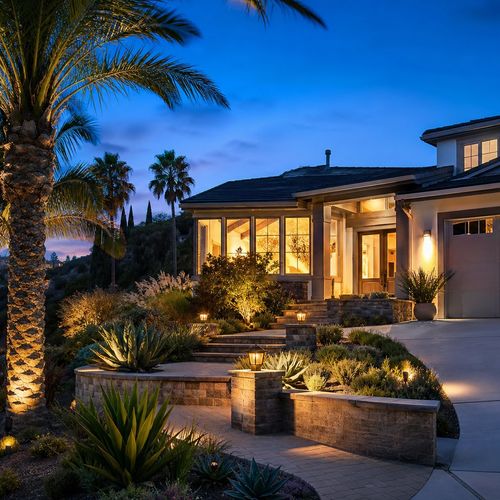
Before you pick a number, pick your evidence. Oceanside has no standard discount, so a below-asking offer holds up only when the listing's time on market, its price reductions, its condition, and recent closed sales of similar homes all point the same direction. Without that, a lowball mostly costs you credibility.
How much negotiating room is there on an Oceanside home?
There's no standard discount, and no honest citywide percentage. How much room is there on an Oceanside home depends on that specific listing's time on market, its price history, its condition, and what similar homes actually closed for. Citywide, the market still leans toward sellers, so any reduction you ask for has to be earned with property-specific evidence.
Key Takeaways
- Oceanside detached homes had a $935,000 median sale price for the 12 months ending October 2026, with a median of 21 days active in the MLS in October 2026, down from 27 days in October 2025.
- Oceanside had about 2.1 months of supply in October 2026, and the Pacific Southwest Association of REALTORS® describes supply below three months as generally favoring sellers.
- A portal-derived measure for the three months ending October 2026 put the average sale price about 1% below asking, but that's a citywide average, not a discount you can count on for a particular listing.
- A supportable below-asking offer connects three things: the listing's market history, the property's condition, and comparable closed sales.
- "Days on market" is not one number: one source reported 21 days and another reported 39 for the same month, so always check who is counting and how.
How much room is there on an Oceanside home after 30 days or a price cut?
It can be meaningful, but only if the listing has lagged its own market and the asking price still sits above what comparable homes closed for. Time and reductions are clues about the seller's situation. They aren't a formula.
What do the citywide numbers actually say?
Start with the context, then set it aside. In October 2026, Oceanside's median time active in the MLS for detached homes was 21 days, according to the Pacific Southwest Association of REALTORS® Oceanside market statistics. That's quicker than the 27 days reported for October 2025.
The same report shows roughly 2.1 months of supply. Under three months generally favors sellers. So a home that has been listed for three weeks in Oceanside is not behind the pace, and I wouldn't build a deep discount around that fact alone.
| Measure (October 2026 unless noted) | Reported figure | What it tells you |
|---|---|---|
| Detached median sale price, 12 months ending October 2026 (PSAR) | $935,000 | Longer-term price level for detached homes |
| Median time active in the MLS (PSAR) | 21 days (27 in October 2025) | Pace for detached homes in the MLS |
| Months of supply (PSAR) | About 2.1 | Under three months generally favors sellers |
| Median listing price (Realtor.com) | $816,250 | What is listed, a different group of homes than what closed |
| Median sold price (Realtor.com) | $852,000 | What closed, not a negotiating range against list price |
| Median listing time (Realtor.com) | 39 days | A different definition than the MLS figure |
| Active listings (Realtor.com) | 585 | Down 6.56% year over year |
Notice the median list price is lower than the median sold price. Those are different groups of homes at different stages, which is exactly why you can't subtract one from the other and call it your discount. Realtor.com's Oceanside market data reports both, and it's useful context rather than an offer formula.
Why do two sources show different days on market?
PSAR reported 21 days active in the MLS for detached homes, while Realtor.com reported a 39-day median listing time citywide. Different datasets, definitions, and property mixes explain the gap.
One more catch: closed-sale days-on-market figures can leave out listings that were withdrawn or relisted at a lower price. A home showing "5 days" may have been on the market for months under a previous listing. Ask for the full listing history before you decide how long a seller has really been waiting.
Does a price reduction mean the seller will take less?
Not automatically. A reduction might mean the first price was unrealistic, the seller changed strategy, the presentation was weak, or there's a condition issue. It can also mean the seller has already corrected to the market.
The question I walk my clients through is simple: after the cut, is the asking price still above what comparable closed sales support? If yes, there's likely room. If the price now sits in line with those sales, a second discount is a harder argument.
When buyers ask me how much cushion is there on an Oceanside home that has been listed for two months, I don't answer with a percentage. I pull the listing history, the reductions, and the closed sales, and we read them together. For context, a three-month measure from Redfin's Oceanside housing market page showed a median sale price of roughly $865,000, about 35 days to sale, and an average sale price around 1% below asking. It's a portal-derived figure, so I treat it as supplementary. It also blends every kind of home and every price tier, so it can't tell you what your target property will do.
What do comparable closed sales say about a below-asking offer?
They're the strongest evidence you can bring. A documented comparison showing that similar nearby homes closed below their final list prices beats the general claim that "Oceanside homes sell below asking" every time.
How do you compare like with like?
Compare an Oceanside detached home with recent closed detached homes. Don't compare it with the citywide median, a condo, a manufactured home, or a different North County city. Oceanside, Vista, Carlsbad, San Marcos, Encinitas, and Escondido differ by housing type, coastal proximity, price band, and inventory.
Within Oceanside, look at the details that move value:
- Neighborhood and street, from Arrowood and Rancho del Oro to Jeffries Ranch and Guajome
- Lot size, living area, and age
- Renovations and overall finish level
- View and proximity to the coast
- Freeway or rail exposure
- HOA obligations
Price per square foot can be misleading. A smaller, fully updated home and a larger one needing work can show similar numbers and be worth very different amounts. You have to compare true comparables, not just ratios.
How much negotiating room is there on an Oceanside home that's a condo versus a single-family home?
It varies by property type, and the data doesn't support a single answer for both. The PSAR figures above are for detached homes. A condo should be measured against recent closed condo sales, and the HOA's finances and rules are part of that picture.
What condition issues strengthen your position?
Condition gives you leverage when it's documented and affects cost. Deferred maintenance, aging systems, or work the listing photos don't show can justify a lower number, especially if the asking price assumes a move-in-ready home.
Be careful here. If the comparable sales you're using were also in rough shape, the condition is already priced in. Inspection findings can also open a conversation about repairs or credits after you're under contract. I'll walk you through how that works in a California transaction before you write the offer, not after.
How do you build an offer you can defend?
Tie three pieces of evidence together: the listing's market history, the property's condition and needed work, and comparable closed sales. If all three point the same way, your offer is supportable. If only one does, expect pushback.
A simple checklist before you offer
- Pull the full listing history. Look for relists, withdrawals, and every reduction, not just the newest date.
- Find recent closed sales of similar homes. Note how their final sale prices compared to their last list prices.
- List the condition items. Separate cosmetic items from real cost items.
- Decide where you're flexible. Price isn't the only term. Timing and contingencies matter to sellers too.
- Write the offer around the evidence. A number with reasons behind it is taken more seriously than a number alone.
When a below-asking offer is a weak move
If a home is priced in line with closed sales, is new to market, and is drawing interest, a steep offer rarely helps. In a market with about 2.1 months of supply, sellers of well-priced homes have options. Buyers do better when they pick the homes where the evidence is on their side.
That's the heart of how I describe this market in why the Oceanside market is selective rather than hot or cold. Some homes move fast and hold their price. Others sit and earn a discount. Your job is to tell which one you're looking at.
Every property is different, and the only way to know for sure is to run the comparison with someone who knows these streets. That's what I do before my buyers write an offer.
Want to see what my clients say about working with me? You can read my reviews on Google, Zillow, and Realtor.com.
FAQ
How much below asking price can I offer on an Oceanside home?
It depends on the specific listing, not a citywide rule. A portal measure for the three months ending October 2026 showed an average sale price about 1% below asking, but that blends every home type and price tier. Your offer should rest on the listing's history, its condition, and comparable closed sales.
Are Oceanside sellers more negotiable after 30 days on the market?
Sometimes, but 30 days alone isn't proof. The median time active in the MLS for Oceanside detached homes was 21 days in October 2026, while a different source reported a 39-day median listing time. Check which definition applies and whether the home was previously relisted.
Does a price reduction mean the seller will accept an even lower offer?
Not necessarily. A reduction tells you the seller has moved, but the real test is whether the new price is still above what comparable closed sales support. If it is, there may be more room. If it isn't, expect less.
How do I use comparable closed sales to justify a lower offer?
Compare recent closed sales of the same property type in the same part of Oceanside, then look at how those sales compared with their final list prices. Adjust for lot size, living area, age, renovations, view, and HOA obligations. I walk my buyers through this comparison before any offer goes in.
How can I tell whether a listing is overpriced rather than just quiet?
Look for a gap between the asking price and recent comparable closed sales, along with a history of reductions or relisting. A home that is priced in line with sales but has few showings may just need time. One priced above the sales evidence with repeated cuts is more likely overpriced.
The bottom line: how much room is there on an Oceanside home comes down to evidence you can document, not a neighborhood-wide discount. If you're weighing an offer on a specific property, get a free home valuation and a comparable-sales review from me and we'll build the case together. You can also read how I approach real estate in Oceanside.
Equal Housing Opportunity. Doug West, REALTOR®, First Team Real Estate, regulated by the California Department of Real Estate. This article is general information, not legal, tax, or financial advice; confirm your own numbers with your closing agent, tax advisor, or lender. This information is deemed reliable but not guaranteed. Information derived from the Internet Data Exchange (IDX) service provided by San Diego MLS.
Check out this article next